

Water Testing & Certification
Red Leaf Asbestos Testing offers water testing and certification to help you address questions about water quality and documentation.
- ✓ Open 24 hours, 7 days a week
- ✓ Serving Los Angeles County, Agoura Hills, Alhambra and 86 more areas
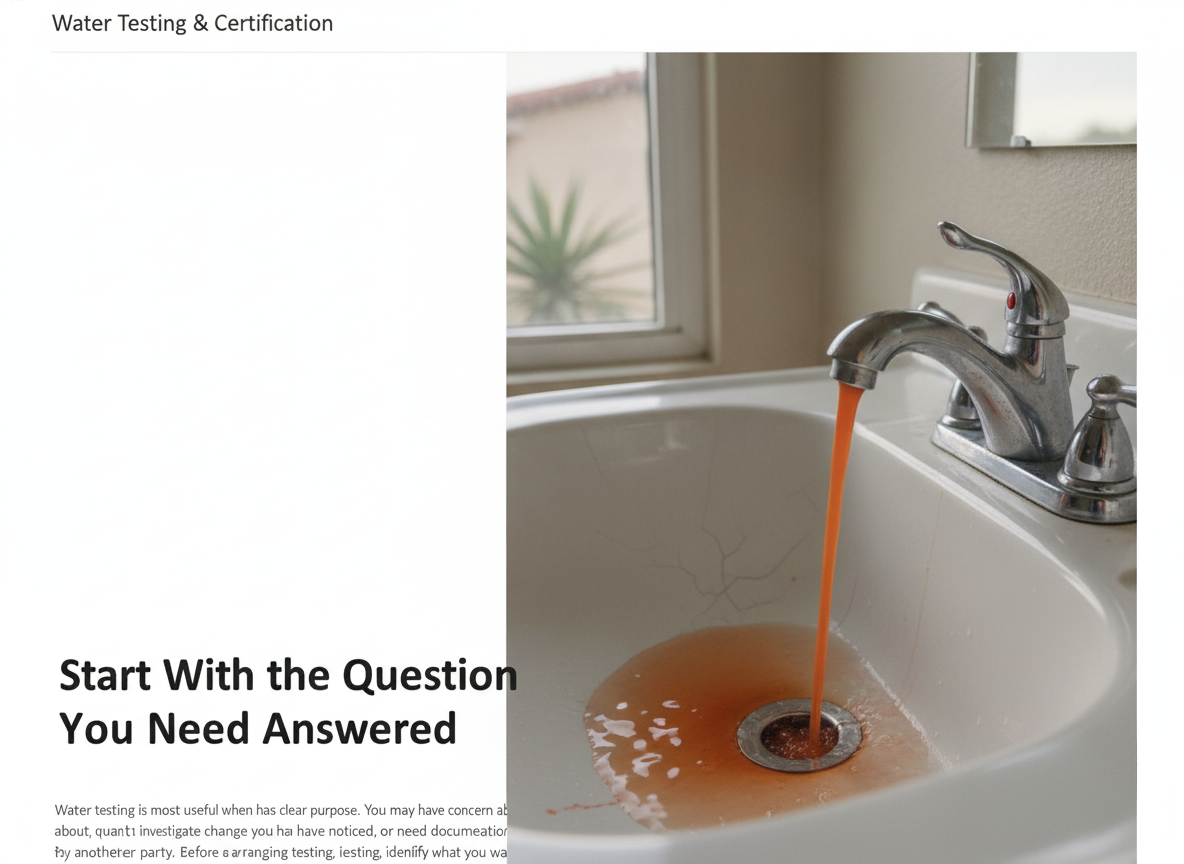
Start With the Question You Need Answered
Water testing is most useful when it has a clear purpose. You may have a concern about water quality, want to investigate a change you have noticed, or need documentation requested by another party. Each situation can call for a different testing scope.
Before arranging testing, identify what you want to learn and how you plan to use the results. If someone has requested a certificate or report, share their written requirements at the outset. That helps keep the discussion focused on the testing and documentation relevant to your situation.
What Water Testing Involves
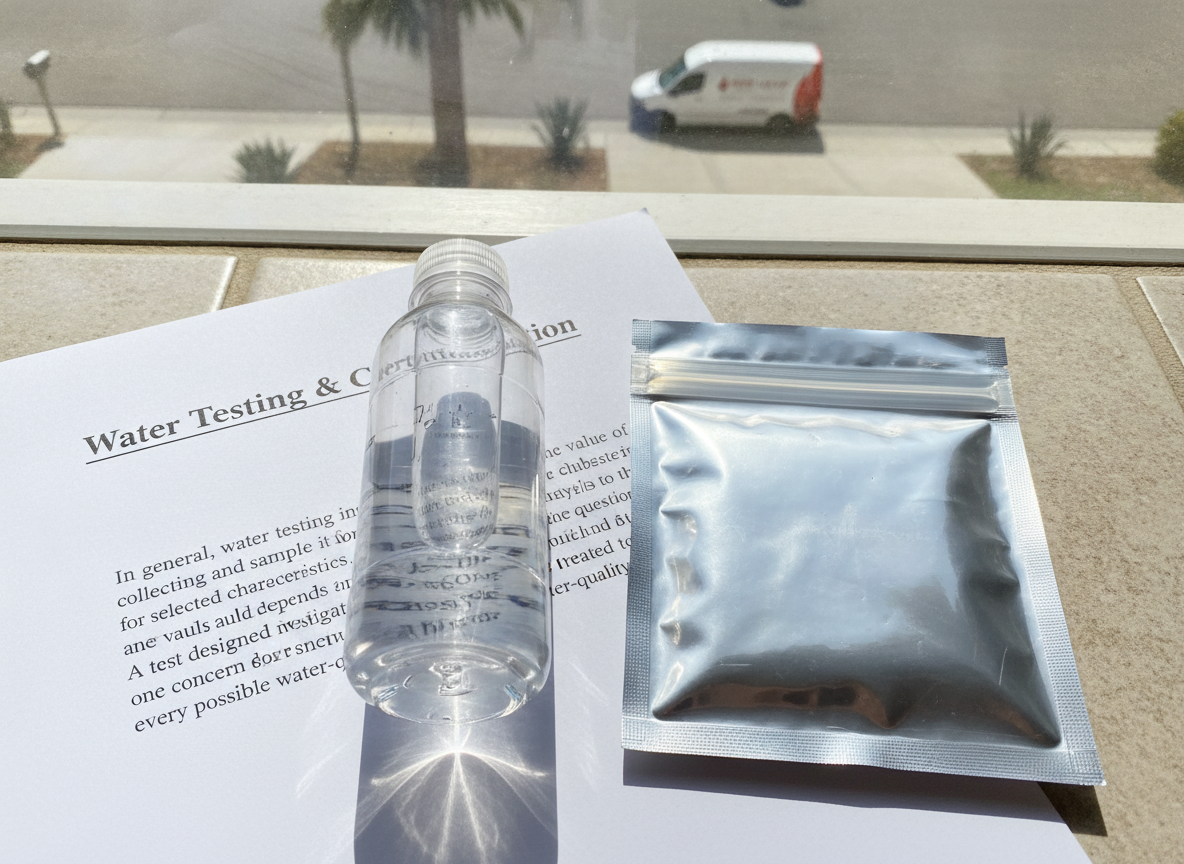
In general, water testing involves collecting a sample and analyzing it for selected characteristics or substances. The value of the results depends on matching the analysis to the question. A test designed to investigate one concern should not be treated as an answer to every possible water-quality issue.
Sampling also matters. The collection location, handling instructions and timing can affect whether a sample is suitable for its intended analysis. Before collecting anything yourself, ask how sampling should be arranged and whether there are instructions you need to follow.
When Testing May Be Worth Considering
Testing may be relevant when you have a specific concern rather than a clear answer. A noticeable change in appearance, taste or odor can prompt questions, but those observations alone do not establish what is present. Likewise, water that looks clear does not answer every question about its quality.
Documentation needs are another reason to discuss testing. If a property-related decision or other requirement depends on water-quality results, establish exactly what the requesting party expects before choosing a test. The intended use should guide the scope, not the other way around.
What Certification Needs to Address
“Certification” needs context: what is being documented, against which requirements, and for whom? A result and a certificate are not interchangeable in every situation. The organization receiving the documentation may have particular expectations about the analysis, sampling or report format.
Bring any relevant instructions to your initial conversation. Discussing those requirements before work begins helps you ask the right questions about whether the proposed service fits your purpose. Avoid assuming that any water test will satisfy every documentation request.
Choose a Service That Matches Your Purpose
Red Leaf Asbestos Testing offers both Water Testing & Certification and water quality testing. If you are seeking testing, certification, or both, contact the business to discuss your goal and the documentation you need.
A useful starting point is a concise description of your concern, where the water comes from, and any requirements you have received. You do not need to diagnose the issue yourself; explain what prompted your inquiry so the conversation can focus on the appropriate scope.
Frequently Asked Questions
Which water test do I need?
That depends on your concern and the intended use of the results. Describe the question you need answered and share any written testing requirements before selecting a scope.
Can I collect the sample myself?
Ask before collecting it. Water sampling can involve specific collection and handling requirements, so confirm the arrangements and instructions first.
Will certification satisfy the organization requesting it?
Acceptance depends on that organization’s requirements. Obtain those requirements and discuss them before arranging testing rather than assuming a certificate will meet every purpose.
What will it cost, and how long will it take?
Ask for pricing and timing for your proposed scope, including any documentation requirements. Confirm these details before deciding to proceed.
Discuss Your Water Testing Needs
Contact Red Leaf Asbestos Testing to discuss Water Testing & Certification. Share your concern and any written requirements, and ask about scope, sampling arrangements, pricing and timing.
Areas we serve
- ● Los Angeles County
- ● Agoura Hills
- ● Alhambra
- ● Arcadia
- ● Artesia
- ● Avalon
- ● Azusa
- ● Baldwin Park
- ● Bell
- ● Bell Gardens
- ● Bellflower
- ● Beverly Hills
- ● Bradbury
- ● Burbank
- ● Calabasas
- ● Carson
- ● Cerritos
- ● Claremont
- ● Commerce
- ● Compton
- ● Covina
- ● Cudahy
- ● Culver City
- ● Diamond Bar
- ● Downey
- ● Duarte
- ● El Monte
- ● El Segundo
- ● Gardena
- ● Glendale
- ● Glendora
- ● Hawaiian Gardens
- ● Hawthorne
- ● Hermosa Beach
- ● Hidden Hills
- ● Huntington Park
- ● Industry
- ● Inglewood
- ● Irwindale
- ● La Cañada Flintridge
- ● La Habra Heights
- ● La Mirada
- ● La Puente
- ● La Verne
- ● Lakewood
- ● Lancaster
- ● Lawndale
- ● Lomita
- ● Long Beach
- ● Los Angeles
- ● Lynwood
- ● Malibu
- ● Manhattan Beach
- ● Maywood
- ● Monrovia
- ● Montebello
- ● Monterey Park
- ● Norwalk
- ● Palmdale
- ● Palos Verdes Estates