

Chemical Contamination Testing
Red Leaf Asbestos Testing offers chemical contamination testing to help you investigate concerns about possible contamination at your property.
- ✓ Open 24 hours, 7 days a week
- ✓ Serving Los Angeles County, Agoura Hills, Alhambra and 86 more areas
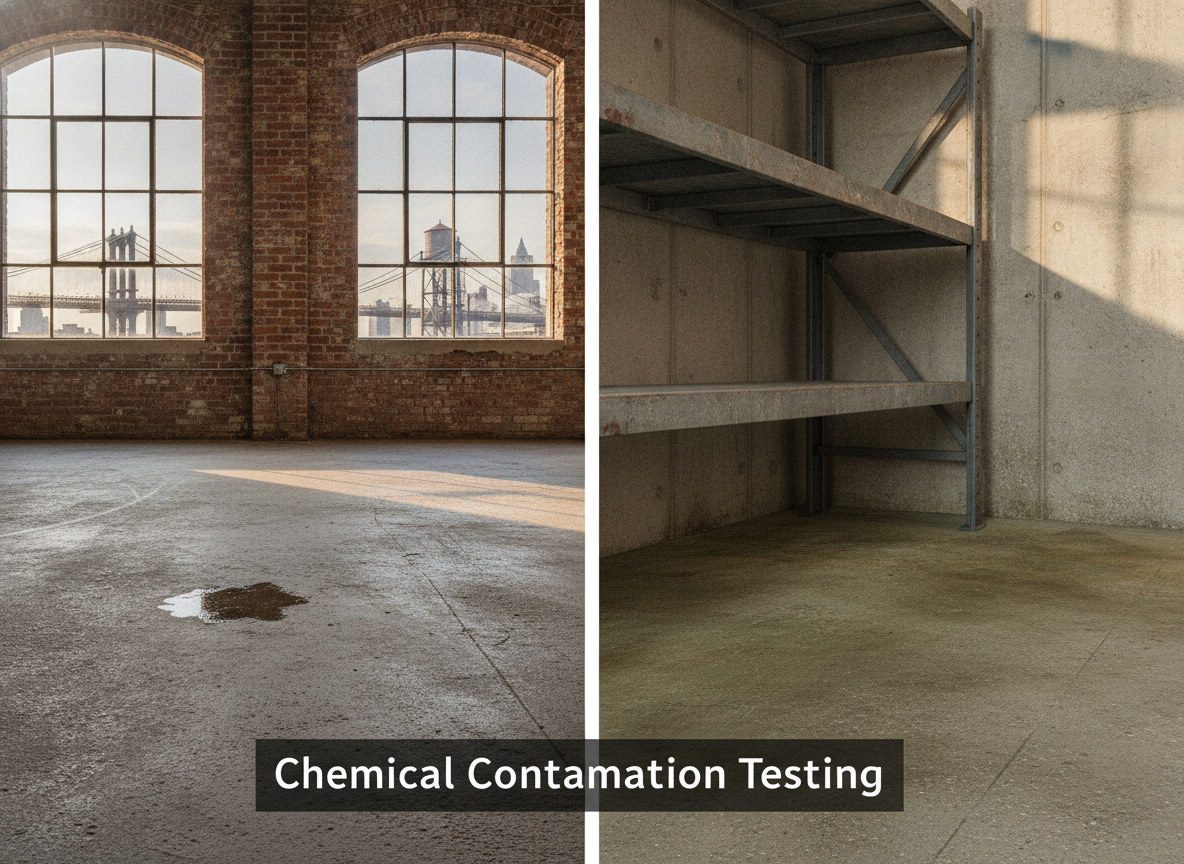
Start With the Question You Need Answered
A concern about chemical contamination often begins with uncertainty: a spill, an unfamiliar substance, a property’s previous use, or a question raised before construction or purchase. These situations can be reasons to discuss testing, but they do not establish that contamination is present.
The starting point is a specific question. Are you investigating a suspected substance, checking an area associated with a particular activity, or seeking information for a property decision? Defining that question helps establish what testing needs to address rather than treating every concern as the same job.
What Chemical Contamination Testing Involves
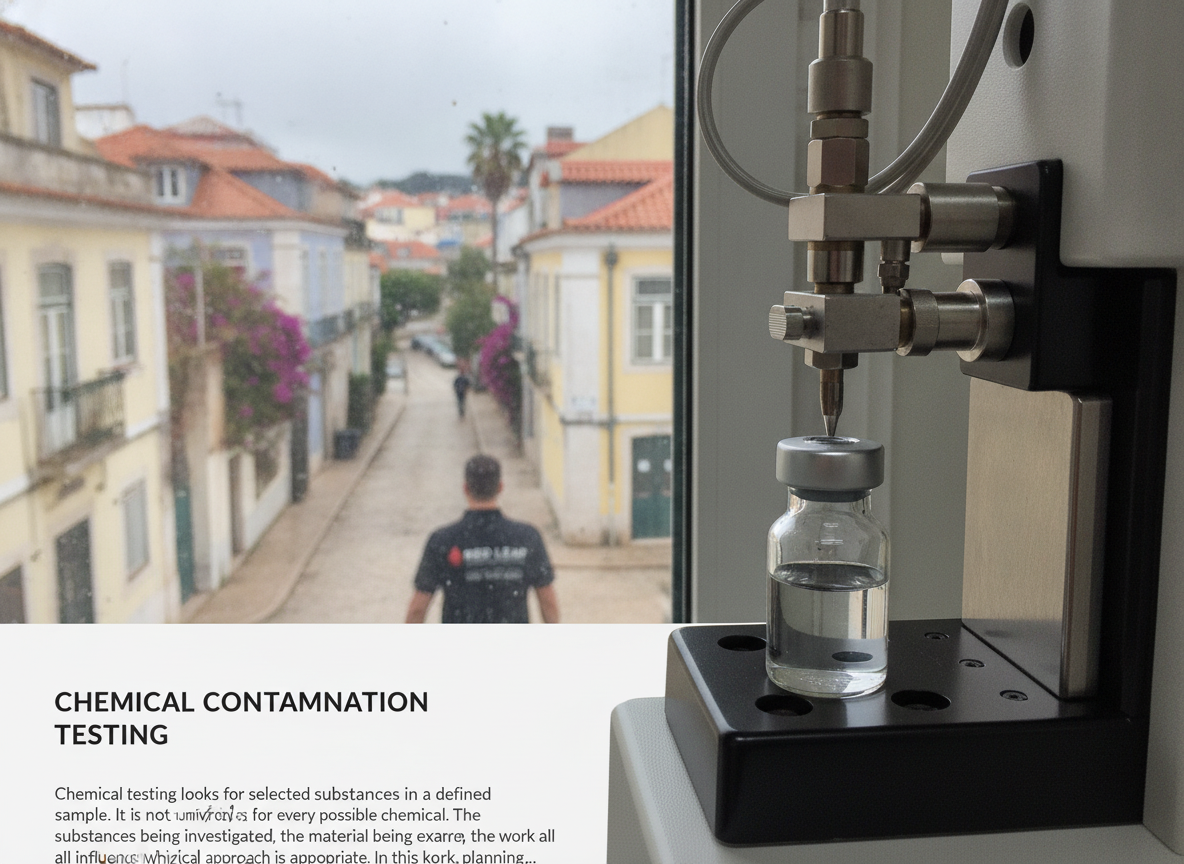
Chemical testing looks for selected substances in a defined sample. It is not a universal check for every possible chemical. The substances being investigated, the material being examined, and the purpose of the work all influence which analytical approach is appropriate.
In this kind of work, planning generally connects three elements: the concern, a suitable sample, and an analysis capable of answering the question. A method suited to one chemical or material may not be suitable for another. That is why the scope matters as much as the decision to test.
A useful testing scope starts with what you need to find out—not simply a request to “test for everything.”
When Testing May Be Worth Discussing
Chemical contamination testing may be relevant to property owners, buyers, managers, or people planning work where a suspected chemical issue needs investigation. You do not need to know the identity of a substance before making an inquiry; describing the circumstances can help frame the discussion.
Useful background includes what prompted the concern, where it occurred, any known products or activities involved, and whether earlier reports exist. An odor or visible change alone cannot identify a chemical or establish its concentration. Equally, the absence of an obvious sign does not answer a specific contamination question.
What Shapes the Scope of the Work
Before buying testing, clarify what the proposed work is intended to establish. In general, the discussion should cover:
- The concern — Describe the suspected source, affected location, and decision the results need to support.
- The testing scope — Clarify which substances and materials would be examined and what falls outside that scope.
- The analysis — Ask how the proposed analytical approach relates to the question being investigated.
- The results — Establish what the findings can address and whether a particular comparison or requirement is relevant.
These distinctions matter when interpreting results. A finding applies to the substances tested and the samples examined; it should not automatically be treated as a conclusion about every chemical or every part of a property.
Discuss Your Concern With Red Leaf Asbestos Testing
Red Leaf Asbestos Testing offers chemical contamination testing, with related services including chemical and volatile compound testing, real-time XRF field analysis, and high-precision ICP-MS lab testing.
The appropriate approach depends on the concern being investigated. Contact us with the background to your situation and the question you need answered, and ask about the scope of chemical contamination testing for your needs.
Frequently Asked Questions
Can one test check for every chemical?
No single analysis answers every possible chemical contamination question. Testing generally targets selected substances or groups of substances, so clarify what is included before proceeding.
What should I have ready when I inquire?
Describe the location, what prompted your concern, any known substances or activities involved, and what you need the results for. Existing reports or product information may also be useful background.
How much does testing cost, and how long does it take?
Ask for pricing and timing for your proposed scope. The substances, samples, and analytical requirements can affect both; confirm these details before authorizing work.
Does a result mean the whole property is clear?
Results need to be understood within the agreed scope. A result for particular samples and chemicals does not establish the condition of untested areas or rule out substances that were not included.
Talk to Us About Chemical Contamination Testing
Contact Red Leaf Asbestos Testing to discuss your concern, ask about the testing scope, and request pricing and timing for your project.
Areas we serve
- ● Los Angeles County
- ● Agoura Hills
- ● Alhambra
- ● Arcadia
- ● Artesia
- ● Avalon
- ● Azusa
- ● Baldwin Park
- ● Bell
- ● Bell Gardens
- ● Bellflower
- ● Beverly Hills
- ● Bradbury
- ● Burbank
- ● Calabasas
- ● Carson
- ● Cerritos
- ● Claremont
- ● Commerce
- ● Compton
- ● Covina
- ● Cudahy
- ● Culver City
- ● Diamond Bar
- ● Downey
- ● Duarte
- ● El Monte
- ● El Segundo
- ● Gardena
- ● Glendale
- ● Glendora
- ● Hawaiian Gardens
- ● Hawthorne
- ● Hermosa Beach
- ● Hidden Hills
- ● Huntington Park
- ● Industry
- ● Inglewood
- ● Irwindale
- ● La Cañada Flintridge
- ● La Habra Heights
- ● La Mirada
- ● La Puente
- ● La Verne
- ● Lakewood
- ● Lancaster
- ● Lawndale
- ● Lomita
- ● Long Beach
- ● Los Angeles
- ● Lynwood
- ● Malibu
- ● Manhattan Beach
- ● Maywood
- ● Monrovia
- ● Montebello
- ● Monterey Park
- ● Norwalk
- ● Palmdale
- ● Palos Verdes Estates